Pareidolia

All art attempts to project emotion, but certain art has another more human quality that is just subtle enough. Pareidolia is the effect we experience when we think that we see a face in a could formation. The quote below by David Hume, an 18th Century Philosopher, explains it beautifully: 

"There is a universal tendency among mankind to conceive of all beings like themselves, and to transfer to every object, those qualitites, with which they are familiarly acquainted, and of which they are intimately conscious. We find human faces in the moon, armies in the clouds; and by a natural propensity, if not corrected by experience and reflection, ascribe malice or good will to every thing, that hurts or pleases us".

I am looking for this kind of emotive art as inspiration for my sculpture, as I want it to have certain qualities that make you feel companionship without going too much into anthropomorphism and staying far away from the Uncanny Valley. Below are a few examples that I find particularly relevant to my design. 

Adam Ben-Dror | www.ben-dror.com | @adambendror Shanshan Zhou | www.behance.net/sszhou www.ben-dror.com/pinokio/ Pinokio is an exploration into the expressive and behavioural potentials of robotic computing. Customized computer code and electronic circuit design imbues Pinokio with the ability to be aware of its environment, especially people, and to expresses a dynamic range of behaviour. As it negotiates its world, we the human audience can see that Lamp shares many traits possessed by animals, generating a range of emotional sympathies. In the end we may ask: Is Pinokio only a lamp? – a useful machine? Perhaps we should put the book aside and meet a new friend. Processing, Arduino, and OpenCV. New Zealand Best Awards - Interactive Category - Gold | 2013 Click Suite Prize for Innovation and Excellence in Media Design - Winner | 2012 Joss Doggett - Asistant Music "Do You See Me?" by Jared C. Balogh | www.alteredstateofmine.net

Zimoun Sound Architectures, Sculptures & Installations Compilation Video V.3.3 / August 24, 2014 Using simple and functional components, Zimoun builds architecturally-minded platforms of sound. Exploring mechanical rhythm and flow in prepared systems, his installations incorporate commonplace industrial objects. In an obsessive display of simple and functional materials, these works articulate a tension between the orderly patterns of Modernism and the chaotic forces of life. Carrying an emotional depth, the acoustic hum of natural phenomena in Zimoun's minimalist constructions effortlessly reverberates. More works & information: http://www.zimoun.ch Next Events: http://zimoun.ch/events.html Newsletter: http://www.zimoun.ch/ewsletter.html Facebook: http://www.facebook.com/pages/Zimoun/134817185765 HD Video Archive: http://vimeo.com/zimoun/videos/sort:plays _ «The sound sculptures and installations of Zimoun are graceful, mechanized works of playful poetry, their structural simplicity opens like an industrial bloom to reveal a complex and intricate series of relationships, an ongoing interplay between the «artificial» and the «organic». It‘s an artistic research of simple and elegant systems to generate and study complex behaviors in sound and motion. Zimoun creates sound pieces from basic components, often using multiples of the same prepared mechanical elements to examine the creation and degeneration of patterns.» Tim Beck «Zimoun is best compared to a watchmaker of a self-reproducing time constructing his own gauging station.» Radjo Monk «The clean, elegant sound sculptures combine visual, sonic, and spatial elements in an organically balanced entirely artwork. Using simple and well- conceived mechanical systems, Zimouns‘s work transforms and activates the space.» Jury Prix Ars Electronica 2010 «Zimoun creates complex kinetic sound sculptures by arranging industrially produced parts according to seemingly simple rules. Using motors, wires, ventilators, etc.., he creates closed systems that develop their own behavior and rules similarly to artificial creatures. Once running, they are left to themselves and go through an indeterminable process of (de)generation. These quasi autonomous creatures exist in an absolutely synthetic sphere of lifeless matter. However, within the precise, determinist systems creative categorioes suddenly reappear, such as deviation, refusal and transcience out of which complex patterns of behavior evolve.» Node10 «It is a poetic and humorous absurdity we find in Zimoun’s work, which opens up a wide, refreshing and enriching space for discoveries, associations and a multitude of approaches.» Nina Terry «The components used in Zimoun’s work are simple, functional and raw, whereas only aesthetically high-level and purposefully chosen elements and materials are used in minimalist fashion. Through radical reduction, Zimoun creates works of art which allow for a plethora of associations without being pinned down to a specific direction. Radical abstraction functions rather like a code in the background of things, thus elegantly avoiding an insinuation of direct, concrete attribution. Thanks to the abundance of mechanical activity, the range of perception, possibilities and interpretations is wide open.» Amanda Neumann «Indeed, one of the refreshing elements of this work is the immediacy with which one can understand the sound-making process, where each micro-event is present, visible, and concrete. Yet at the same time the resulting complexity of the total system, conjured before your eyes, defies any attempt to dissect it. You might find yourself feeling there is a «prime mover» at work behind the scenes, but in fact it is just the characteristic reaction of materials behaving together and in unison with the space of their activity. A magic of the real.» Xymara _ Website: http://www.zimoun.ch _

Tackle the Truth with Comedy

A lot of the stigma around disability and growing old clearly stems from our fear of death. I was watching Louie CK the other night, and some of his jokes clearly highlight the dark truth of the healthcare system. Comedy is a great way of tackling these things, which reminds me how important it is that I include a playful element in my designs. 

Louis CK on his standup Chewed Up.

Senior Style & Inclusive Design

A few weeks ago I attended an event at the Cooper Hewitt Smithsonian Design Museum called "Inclusive Design: Myth or Reality?". The event featured talks by John Marshall, design director at MAP, the industrial design firm that created the Sabi bathroom range. Below you see how it is designed to be esthetically pleasing yet practical in the way it is easily assembled and can serve as a support grip. 

Scott Summit, founder of Summit ID, a firm specializing and revolutionizing the way prosthetics are made through 3D manufacturing was also there, amongst many other people that have a true passion to innovate in this field. I was glad I went, as it confirmed much of the strong need for innovation in this field, and how much it is appreciated by those who need it. There was a nice mix in the audience of old and young, disabled and non-disabled, and the appreciation of this type of design was very strong - people could not express enough how much this all meant to them. The conversations confirmed much of what I believe in and also want to reflect in my designs as an artist and designer: 

- The elderly think they are young, and don't want to be treated as old. 

- They don't want us to design with this stigma in mind, that they need to be empowered. 

- The main point is to design for the most common issues, without making it obvious: poor sight, reaching and memory. 

- Make packaging easy to open and instructions in life-size. 

I also met one of the colorful women of the Idiosyncratic Fashionista's, who gave me her business card. I plan to reach out to them in hopes of an interview, as they represent my target audience perfectly in terms of how they carry themselves. My product would only be enjoyed by a person who enjoys art, sculpture and cares about their aesthetic environment.

Although older people don't like to be distinguished in terms of style, there is a certain distinction when it comes to aesthetic preference that is inevitable. Looking through blogs, talking to people and pondering over what this could be, I came to the conclusion that what makes them stand out is a strong inner core that is not afraid to show itself.

Women of that age are confident and therefore more playful - even sculptural - in the way they carry themselves. They are not afraid of death, and therefore not afraid of splashing with color or openly talking about health concerns. However, they feel that they deserve to do so boldly and beautifully. 

Judith, another known blogger names herself Style Crone, and uses her style as a form of meditation: 

"I am always inspired by diversity and individual expression and find inspiration everywhere! I spent most of my career working as a psychiatric nurse in an emergency setting.  I also spent a period of time managing the care of head and spinal cord injuries.  Choosing my outfits, which always included a hat, was a way to express myself creatively and as a form of meditation as I approached my day, which usually included extreme and painful stories told by interesting, traumatized people. " - http://stylecrone.com/biography/

The Accidental Icon is a woman that is very inspired by Yohji Yamamoto's fashion and lifestyle, and has a very sophisticated look. Although her aesthetic preference is more modernistic, she still has qualities to her style that make her outfits sculptural. 

Inspiration & Objectives

Inclusive design too often means attempting to be everything for everyone - however, adding too much functionality most often hinders beautiful and functional design. Inclusive or universal design has many contradicting principles, and I found Graham Pullin's book "Design meets Disability" useful in helping to sort out some of these conflicts. Not only does the book have a myriad of good examples (some of which featured here), but he also suggests a new approach to inclusive design that I have been attempting to strive for with my thesis:

"I would like to propose the term "resonant design" for a design intended to address the needs of some people with a particular disability and other people without that disability but perhaps finding themselves in particular circumstances. So this is neither design for just able-bodied people nor design for the whole population; nor even does it assume that everyone with a particular disability will have the same needs. It is something between these extremes, not as a compromise, but as a fundamental aspiration". -93

For we are all disabled somehow ... 

Naoto Fukasawa's philosophy regarding designing products that require no thought is also very relevant to my design, as such a product truly allows for cognitive inclusion. His Muji CD player is a classic example of this. 

"Fluidtime", a time piece by Crispin Jones and Michael Kieslinger at the interaction Design Institute of Ivrea, demonstrates our events based perception of time and proposes an alternative. This is not unlike what I aim to do with my sculpture, as exercising requires breaking up the habits my user currently has in place. The sculpture needs to not be a distraction, simply indicate the state in a subtle manner. Pullin states in his book:

"In Fluidtime, the movement of an abstract object on the wall of the design studio reflected the progress of a communal washing machine in the laundry block - meaningful if you knew what to look for, but otherwise discreet. Only when the washing cycle had finished and the machine was free for the next person to use did the display unfurl an array of bright blue ribbons. It was "Designed to be unobtrusive until it had significant information to impart", and in this way it worked well in the background of an architectural space." - 262


The objective is to make it a useful and beautiful indication of time in relation to your body. 

  • Utilitarian: The object has a specific function aside it's main purpose. This is one that correlates to your body algorithmically. If you fail, the function starts to fail. Furthermore, the stigma within disability is much derived from the fact that assistive technology solely serves one purpose.
  • Sculptural: When not used, it is pleasing to have around and serves as part of your interior decoration. 
  • Time Piece: It serves as an indication of your body, only for those who know how to read it. Hence, it is a visual language system that correlates to the wearable, and communicates time to the wearer and potential caretakers. 
  • Reward System: It shows you when it is proud of your accomplishments by acknowledging your presence. It shows you when you could have done better by demonstrating tension. The object in this state shows how close it is to loosing it's specific function - just like your body could when not taking care of it. 

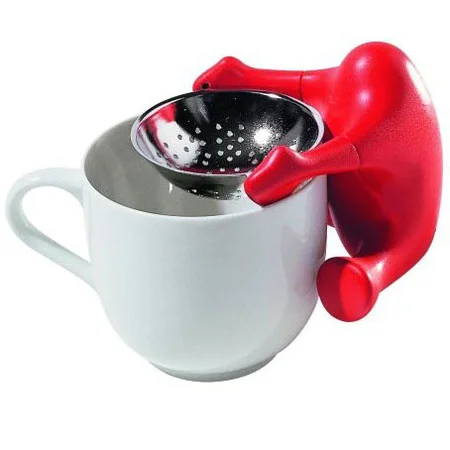
Alessi is in this sense a great source of inspiration, as they are known for designer objects with a personal and humoristic touch. I'm not sure I want to go for something quite as "fun", but many of their tools exemplify how playful touches can truly be integrated into a product to communicate emotion. 

I was also very happy to see that Lunar created this beautiful bike and yoga mat that allows for people to think about their health in discretion and style, demonstrating the need for such devices. 

I was at Reuven Israel's "Multipolarity" exhibition a few weeks back, and realized here how the aesthetic qualities are very similar to what I aim to achieve in my final design. Read more about the exhibition here

Find a long list of precedents and inspiration on my thesis Pinterest board